
All-on-4 full-arch implants: are you a candidate?
By Kai Ramos · Updated 2026-06-01
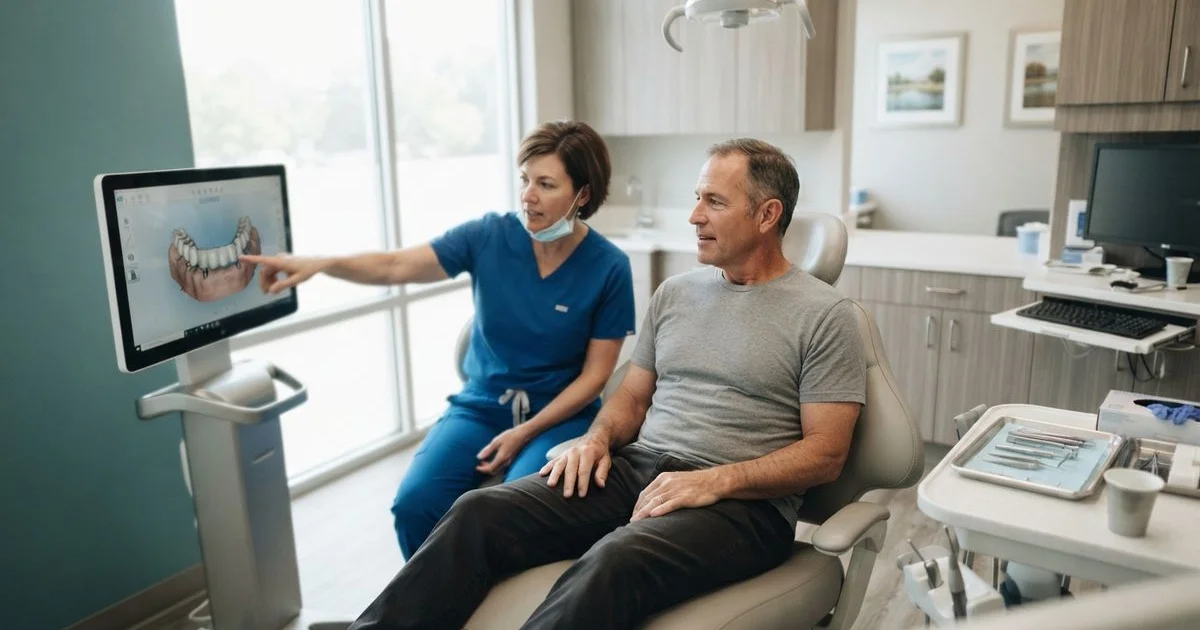
If you’ve lost most or all of your teeth in one arch, or you’re tired of a denture that slips when you eat, All-on-4 is one of the more common paths people in Greenville land on. It uses four implants angled to anchor a full fixed arch of teeth, often without needing a bone graft first. That last part is the appeal: fewer surgeries, a shorter timeline, and a same-day set of teeth in many cases. But it isn’t automatically the right fit for everyone, and knowing whether you’re a reasonable candidate before you sit down for a consult saves you time. You can browse local full-mouth implant providers once you have a sense of what to ask them.
What makes someone a good candidate
Surgeons look at a handful of things before recommending All-on-4:
- Remaining bone in the back of the jaw. The whole design exists because the rear implants are angled to reach bone that’s often still usable even after years of tooth loss, so a shrinking ridge is less of a dealbreaker here than with other implant approaches.
- Overall health for a surgical procedure. Uncontrolled diabetes, certain blood thinners, and heavy smoking can all slow healing and lower success rates. None of these automatically rule you out, but your surgeon needs the full picture.
- Gum health. Active gum disease usually gets treated first, since implants placed into inflamed tissue integrate less reliably.
- Realistic expectations about the timeline. You’ll wear a temporary prosthesis for months while the implants fuse to bone before the final teeth are made.
People who’ve worn a loose or ill-fitting denture for years are frequently good candidates, since the bone loss that made the denture difficult is often the exact pattern this design was built for.
What the process looks like, roughly
| Stage | What happens | Typical timing |
|---|---|---|
| Consultation and imaging | 3D scan to map bone volume and nerve position | 1 visit |
| Extraction and placement | Remaining teeth removed, four implants placed | 1 surgical visit |
| Temporary teeth | A fixed provisional arch, often same day | Day of surgery |
| Healing | Bone fuses to the implants | 3 to 6 months |
| Final prosthesis | Lab-made permanent arch delivered | After healing confirmed |
Every case is different, and a graft, extra healing time, or a staged approach can extend this. Your surgeon will map your actual timeline after imaging, not a generic one.
Where people get tripped up
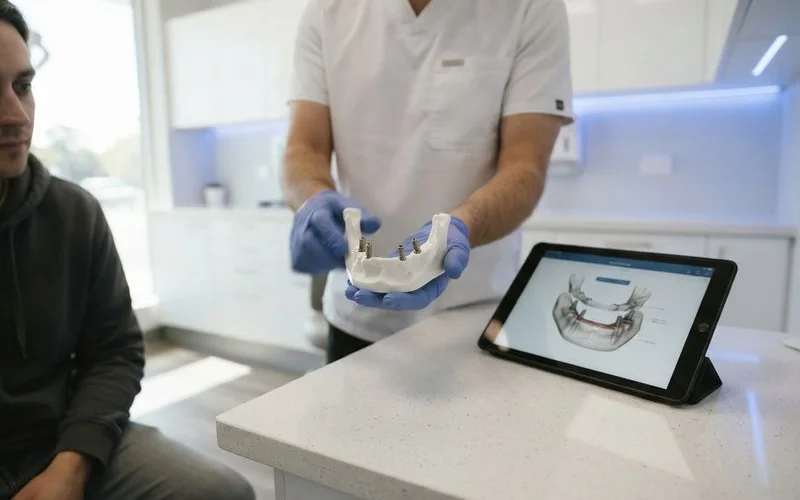
The biggest disconnect is expecting a graft-free, single-surgery process no matter what. If imaging shows very little bone even in the back of the jaw, or if there’s an infection that needs to clear first, your surgeon may recommend a staged plan instead. That’s not a sales tactic, it’s a bone quality issue, and getting a second opinion from another provider is reasonable if the recommendation surprises you.
Cost is the other common surprise. All-on-4 usually costs less per arch than replacing every tooth individually, but it’s still a significant procedure with lab fees for the final prosthesis on top of the surgical fee. Ask for a written breakdown of what’s included in your quoted price versus what’s billed separately, such as the temporary teeth, the CT scan, and any sedation.
Questions worth asking at a consultation
- How much bone do I have in the back of my jaw, based on imaging, not just an exam?
- Would you recommend four implants or more in my case, and why?
- What happens if an implant doesn’t integrate the way you expect?
- Is the temporary prosthesis included in the quoted price, or billed separately?
- How many All-on-4 cases has this office completed, and what does follow-up care look like in year one?
A provider who answers these plainly, with specifics rather than reassurance alone, is generally a good sign. Our ranking methodology weighs how completely local offices answer exactly this kind of question in their public information, alongside patient sentiment over time.
This is general information, not a diagnosis. Whether All-on-4 fits your situation depends on your own bone volume, health history, and goals, which only an in-person exam and imaging can confirm.
Start by comparing what different offices in the area offer, then bring your specific questions to the consultation. You can find more background on the home page if you’re still deciding where to start.
FAQ
- How many implants does All-on-4 actually use?
- Four implants per arch is the base design, angled at the back to reach denser bone without a graft. Some patients need five or six for extra support; your surgeon decides that after imaging, not before.
- Can I get All-on-4 if I've worn dentures for years?
- Often, yes. Long-term denture wearers lose bone volume over time, which is exactly the situation All-on-4 was designed around, since the angled rear implants can anchor in bone that's still there even after ridge loss.
- Do I need all my remaining teeth removed first?
- If you're keeping any natural teeth in that arch, they usually need to come out at the same visit as implant placement, since the fixed prosthesis replaces the entire arch rather than filling in gaps.
- How soon will I leave with teeth?
- Most All-on-4 patients wear a temporary fixed prosthesis the same day as surgery. The final, lab-made set typically follows a few months later once the implants have fully integrated with bone.
Related on this site
- Browse full mouth dental implants providers
- What full-mouth dental implants cost in Greenville, SC
- Helping an aging parent choose between dentures and implants
- Missing or lost a tooth? Your dental implant options in Greenville
- Told you need a bone graft or sinus lift before implants? Here's what that means
- All guides →